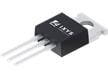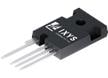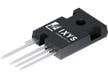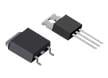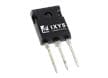



IXTK102N30P

IXYS
747-IXTK102N30P
IXTK102N30P

Mfr.:

Description:
MOSFETs 102 Amps 300V 0.033 Rds

ECAD Model:
Download the free Library Loader to convert this file for your ECAD Tool. Learn more about the ECAD Model.

In Stock: 344

Stock:
344
Can Dispatch Immediately
On Order:
168
Factory Lead Time:
37
Weeks Estimated factory production time for quantities greater than shown.
Minimum: 1   Multiples: 1
Unit Price:
-,-- €
Ext. Price:
-,-- €
Est. Tariff:

Pricing (EUR)

Qty. Unit Price
Ext. Price
14,84 € 14,84 €
10,10 € 101,00 €
9,44 € 944,00 €

Product Attribute Attribute Value Select Attribute
IXYS
Product Category: MOSFETs
RoHS:  
Si
Through Hole
TO-264-3
N-Channel
1 Channel
300 V
102 A
33 mOhms
- 20 V, 20 V
5 V
224 nC
- 55 C
+ 150 C
700 W
Enhancement
PolarHT
Tube
Brand: IXYS
Configuration: Single
Country of Assembly: Not Available
Country of Diffusion: Not Available
Country of Origin: PH
Fall Time: 30 ns
Forward Transconductance - Min: 45 S
Product Type: MOSFETs
Rise Time: 28 ns
Series: IXTK102N30
Factory Pack Quantity: 25
Subcategory: Transistors
Transistor Type: 1 N-Channel
Typical Turn-Off Delay Time: 130 ns
Typical Turn-On Delay Time: 30 ns
Unit Weight: 10 g
Products found:
To show similar products, select at least one checkbox
Select at least one checkbox above to show similar products in this category.
Attributes selected: 0

This functionality requires JavaScript to be enabled.

TARIC:
8541500000
CNHTS:
8541290000
CAHTS:
8541290000
USHTS:
8541290065
JPHTS:
8541290100
KRHTS:
8541299000
MXHTS:
85415001
ECCN:
EAR99

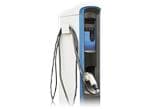
Electrical Vehicle AC Chargers

Littelfuse provides a wide range of products that are suitable for Electric Vehicle AC Chargers. Although simpler in nature compared to DC chargers, AC charging stations safely deliver AC power from the electrical grid into the vehicle. Due to space and weight constraints in the vehicle, on-board chargers and AC charging stations are typically limited to lower amounts of power (22kW or less), which means charging time is slow – taking several hours. These systems also rely on a vehicle’s on-board charger to enable the conversion of AC power from the grid into DC power to charge the vehicle’s battery. It’s critical that proper measures are taken to safeguard both the charger and vehicle.