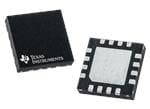


SN65MLVD203BRUMR

Texas Instruments
595-SN65MLVD203BRUMR
SN65MLVD203BRUMR

Mfr.:

Description:
LVDS Interface IC Multipoint-LVDS line driver and receiver A 595-SN65MLVD203BRUMT

ECAD Model:
Download the free Library Loader to convert this file for your ECAD Tool. Learn more about the ECAD Model.
Mouser does not presently sell this product in your region.

Availability

Stock:

Product Attribute Attribute Value Select Attribute
Texas Instruments
Product Category: LVDS Interface IC
Delivery Restriction:
 Mouser does not presently sell this product in your region.
RoHS:  
Multipoint-LVDS Transceiver
1 Driver
1 Receiver
200 Mb/s
LVTTL, M-LVDS
LVTTL, M-LVDS
3.6 V
3 V
- 40 C
+ 125 C
SMD/SMT
WQFN-16
With ESD Protection
Reel
Cut Tape
MouseReel
Brand: Texas Instruments
Country of Assembly: CN
Country of Diffusion: JP
Country of Origin: CN
Duplex: Full Duplex
Operating Supply Current: 16 mA
Pd - Power Dissipation: 100 mW
Product: LVDS Transceivers
Product Type: LVDS Interface IC
Propagation Delay Time: 2.5 ns, 6 ns
Series: SN65MLVD203B
Factory Pack Quantity: 3000
Subcategory: Interface ICs
Products found:
To show similar products, select at least one checkbox
Select at least one checkbox above to show similar products in this category.
Attributes selected: 0

This functionality requires JavaScript to be enabled.

TARIC:
8542399000
CNHTS:
8542399000
CAHTS:
8542390000
USHTS:
8542390090
MXHTS:
8542399999
ECCN:
EAR99

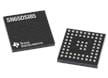
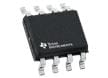
SN65MLVD203B M-LVDS Line Driver & Receiver

Texas Instruments SN65MLVD203B Multipoint Low-Voltage Differential Signaling (M-LVDS) Line Driver & Receiver is optimized to operate at signaling rates up to 200Mbps. This device has a robust 3.3V driver and receiver in the standard QFN footprint for demanding industrial applications. The bus pins are robust to ESD events, with high levels of protection to the human-body model and IEC contact discharge specifications. The device combines a differential driver and a differential receiver (transceiver), which operates from a single 3.3V supply. The transceiver is optimized to operate at signaling rates up to 200Mbps.