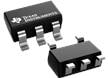


TLV9032WDSGRQ1

Texas Instruments
595-TLV9032WDSGRQ1
TLV9032WDSGRQ1

Mfr.:

Description:
Analog Comparators Automotive 1.65-V t o 5.5-V precision d

Lifecycle:
New Product:
New from this manufacturer.
ECAD Model:
Download the free Library Loader to convert this file for your ECAD Tool. Learn more about the ECAD Model.
Mouser does not presently sell this product in your region.

Availability

Stock:

Product Attribute Attribute Value Select Attribute
Texas Instruments
Product Category: Analog Comparators
Delivery Restriction:
 Mouser does not presently sell this product in your region.
RoHS:  
SMD/SMT
WSON-8
2 Channel
Push-Pull
Precision
1.65 V
5.5 V
2 mV
- 40 C
+ 125 C
Brand: Texas Instruments
CMRR - Common Mode Rejection Ratio: 50 dB
Country of Assembly: TH
Country of Diffusion: US
Country of Origin: TH
Input Type: Rail to Rail
Moisture Sensitive: Yes
Product: Analog Comparators
Product Type: Analog Comparators
Propagation Delay Time: 150 ns
PSRR - Power Supply Rejection Ratio: 95 dB
Shutdown: No Shutdown
Factory Pack Quantity: 3000
Subcategory: Amplifier ICs
Products found:
To show similar products, select at least one checkbox
Select at least one checkbox above to show similar products in this category.
Attributes selected: 0

This functionality requires JavaScript to be enabled.

CAHTS:
8542330000
USHTS:
8542330001
MXHTS:
8542330299
ECCN:
EAR99

TLV902x/TLV902x-Q1/TLV903x/TLV903x-Q1 Comparators

Texas Instruments TLV902x/TLV902x-Q1/TLV903x/TLV903x-Q1 Precision Comparators are a family of dual and quad-channel comparators. The family offers low input offset voltage, integrated Power-On Reset (POR) circuitry, and fault-tolerant inputs with an excellent speed-to-power combination with a propagation delay of 100ns. These devices have an operating voltage range of 1.65V to 5.5V with a quiescent supply current of 18µA per channel. This device family also includes a Power-On Reset (POR) feature that ensures the output is in a known state until the minimum supply voltage has been reached. A small amount of time passes before the output responds to the inputs. This feature prevents output transients during system power-up and power-down.